WSDOT 2026 Freight System Plan (FSP) Online Open House
Share WSDOT 2026 Freight System Plan (FSP) Online Open House on FacebookShare WSDOT 2026 Freight System Plan (FSP) Online Open House on TwitterShare WSDOT 2026 Freight System Plan (FSP) Online Open House on LinkedinEmail WSDOT 2026 Freight System Plan (FSP) Online Open House link
WSDOT is seeking your input on freight needs, challenges, and opportunities throughout the state. We will use this input as we develop the 2026 Washington State Freight System Plan (FSP), which will help guide policy and investment decisions to address Washington's multimodal freight needs. Additional information on the 2026 FSP is available on the WSDOT Freight System Plan webpage.
How to share input
Effective freight planning in Washington depends on input from a wide range of partners, including regional and local governments, ports, Tribes, freight system users, and community members and organizations. Your input will help ensure that the 2026 FSP documents real-world freight needs, challenges, and opportunities.
You can currently share input with WSDOT through a survey and an interactive map tool (scroll down or click the links below to access these resources).
Use the survey to share thoughts and insights on freight-related opportunities and challenges for you, your organization, your community, or all of Washington. You can access the survey directly or select the Take Survey button in the box below.
Use the interactive map tool if you would like to share details about freight movement at a specific location(s) in Washington. You can access the map directly or select the Interactive Map tab on the box below.
The importance of freight movement in Washington
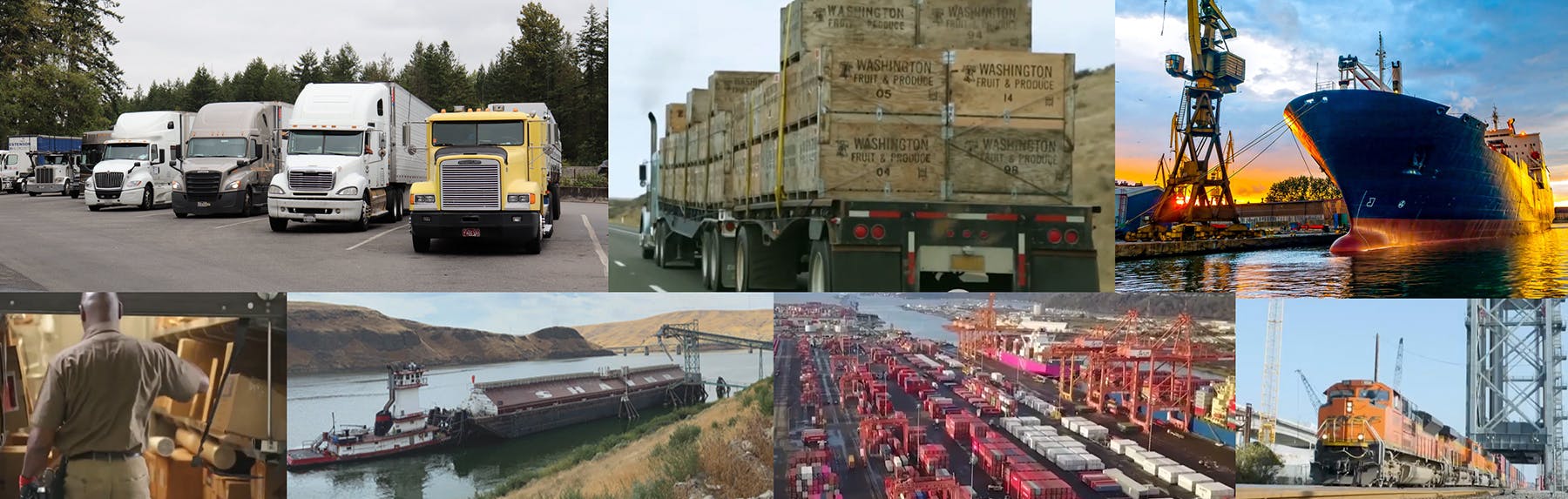
Freight is the backbone of Washington's economy. Every day, goods move into, out of, and across the state using a multimodal, interconnected freight transportation system. This system - composed of trucks, trains, airplanes, cargo ships, barges, and pipelines - supports Washington's local communities, connects local businesses to global markets, and helps people get the products they need. A safe, reliable, resilient, and efficient freight transportation system is critical to Washington state and regional supply chains.
WSDOT is seeking your input on freight needs, challenges, and opportunities throughout the state. We will use this input as we develop the 2026 Washington State Freight System Plan (FSP), which will help guide policy and investment decisions to address Washington's multimodal freight needs. Additional information on the 2026 FSP is available on the WSDOT Freight System Plan webpage.
How to share input
Effective freight planning in Washington depends on input from a wide range of partners, including regional and local governments, ports, Tribes, freight system users, and community members and organizations. Your input will help ensure that the 2026 FSP documents real-world freight needs, challenges, and opportunities.
You can currently share input with WSDOT through a survey and an interactive map tool (scroll down or click the links below to access these resources).
Use the survey to share thoughts and insights on freight-related opportunities and challenges for you, your organization, your community, or all of Washington. You can access the survey directly or select the Take Survey button in the box below.
Use the interactive map tool if you would like to share details about freight movement at a specific location(s) in Washington. You can access the map directly or select the Interactive Map tab on the box below.
The importance of freight movement in Washington
Freight is the backbone of Washington's economy. Every day, goods move into, out of, and across the state using a multimodal, interconnected freight transportation system. This system - composed of trucks, trains, airplanes, cargo ships, barges, and pipelines - supports Washington's local communities, connects local businesses to global markets, and helps people get the products they need. A safe, reliable, resilient, and efficient freight transportation system is critical to Washington state and regional supply chains.